In the world of industrial manufacturing, water is more than just a utility—it is a lifeblood. From feeding massive boilers to cooling sensitive electronic components, the quality of your water directly impacts your bottom line. However, many facilities struggle with a silent efficiency-killer: hard water.
Installing an industrial water softener plant is no longer just a “best practice”; it is a strategic necessity for operational longevity and financial health. This guide explores the critical uses, technical benefits, and the undeniable Return on Investment (ROI) of water softening systems.
At its core, an industrial water softener plant is a specialized filtration system designed to remove high concentrations of calcium and magnesium from raw water. Through a process called ion exchange, these minerals – which cause “hardness” – are replaced with sodium or potassium ions.
Without this intervention, these minerals precipitate out of the water, especially when heated, creating a rock-hard layer of limescale inside your machinery.
While every facility needs clean water, certain sectors are particularly vulnerable to the effects of mineral-heavy water:
Limescale is an incredible insulator. According to the U.S. Department of Energy, even a thin 1/8-inch layer of scale in a boiler can increase energy costs by over 20%. By keeping heat transfer surfaces clean, a softener ensures your system operates at peak thermal efficiency.
Industrial assets like chillers, heat exchangers, and pumps are multi-million dollar investments. Hard water causes internal corrosion and blockages that force these machines to work harder, leading to premature wear and tear. A water softener acts as a protective shield, often doubling the operational life of your plumbing and machinery.
Unscheduled shutdowns are the enemy of profitability. Removing minerals at the source means fewer hours spent on acid cleaning, descaling, and emergency repairs. This translates to higher machine uptime and a more predictable maintenance schedule.
Hard water “deactivates” many industrial soaps and cleaning agents. By switching to soft water, industries like textiles and commercial laundries can reduce their chemical consumption by 25% to 40%, as the chemicals can finally work at their intended potency without being neutralized by calcium.
Whether it’s the brightness of a dyed fabric or the clarity of a bottled beverage, soft water provides a stable, predictable baseline for production. It eliminates the “variable” of mineral interference, ensuring a high-quality, “on-spec” product every time.
The decision to install an industrial water softener plant should be backed by data. When calculating Return on Investment (ROI), look beyond the upfront capital cost and consider these four pillars:

Return on Investment (ROI) is calculated by subtracting the investment cost from total savings, dividing the result by the investment cost, and multiplying by 100 to get the percentage.
Savings Category | Source of Financial Gain | Estimated Impact |
Energy Bills | Better heat transfer in boilers/chillers | 10%–20% reduction |
Chemical Costs | Lower detergent and dye usage | 25%–40% reduction |
Labor & Parts | Fewer descaling sessions and repairs | 30%–50% reduction |
Downtime | Increased production hours | Varies by industry |
Typical Payback Period: Most medium-to-large scale industrial facilities find that a high-quality water softener plant pays for itself within 12 to 18 months through energy and chemical savings alone.
In 2026, industrial sustainability is more than a trend; it’s a requirement. An industrial water softener plant helps you meet environmental goals by reducing water waste (through fewer blowdown cycles) and cutting your carbon footprint via energy efficiency.
Don’t let hard water erode your profits from the inside out. Investing in a tailored water treatment solution is a proactive move that safeguards your equipment, optimizes your processes, and delivers a measurable boost to your bottom line.
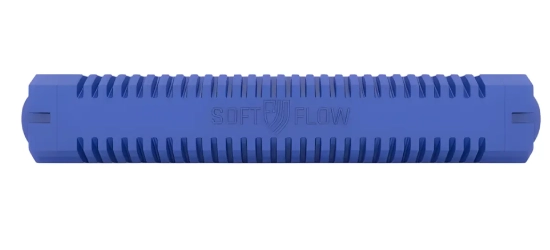
Unlike salt-based systems that require constant refills, SOFTFLOW® uses advanced Sequestration Technology. It neutralizes minerals without adding sodium, preventing scale buildup while remaining virtually maintenance-free and eco-friendly.
Yes. SOFTFLOW® is engineered for high-volume environments. Our heavy-duty units protect boilers and cooling towers even at hardness levels exceeding 500 ppm, ensuring 24/7 scale prevention without flow restriction.
Minimal to none. Because it is a salt-free system, there are no brine tanks to clean or heavy bags to haul. You simply perform a periodic media check, saving your team hours of labor and eliminating the risk of mechanical failure.
SOFTFLOW® is a zero-waste system. Unlike traditional plants that discharge salt-heavy brine and waste thousands of liters during backwash, our technology has no discharge, helping your facility conserve water and stay “green.”
Most facilities achieve a full payback in 12 to 18 months. This is driven by a 15–20% reduction in energy costs, a 30% drop in chemical usage, and significantly longer lifespans for expensive machinery like RO membranes and heat exchangers.
Stay informed about new tips, offers, and product updates.

Brand by Aquaficient Technologies Pvt Ltd.
Aquaficient Technologies Private Limited
#A1&2, Dwarakavasa Road, Bharath Nagar, Bengaluru, Karnataka, 560091.
Get notified with our latest updates and innovations.
© 2024 Copyrights by Aquaficient Technologies Private Limited. All right reserved.
Designed & Developed by SwaParichay Studios