
Diwali Cleaning? Don’t Let Hard Water Ruin Your Sparkling Home
Introduction
Diwali is just around the corner. The curtains are freshly washed, the floors are shining and every corner of the house is getting the attention it deserves. But there is one thing that can spoil all that hard work: those stubborn white spots that keep appearing on your bathroom taps, shower glass and kitchen sink.
You clean them today. They return tomorrow.
If this sounds familiar, hard water could be the reason.
Hard water is a common problem in Indian households. It contains dissolved minerals, mainly calcium and magnesium, which can leave deposits on surfaces when water evaporates. Over time, these deposits can make your bathroom look dull, affect your fixtures and contribute to scale buildup inside household appliances.
So before you begin your Diwali cleaning, here is everything you need to know about removing hard water spots, preventing recurring stains and keeping your home sparkling beyond the festive season.
What Causes Hard Water Spots in Your Home?
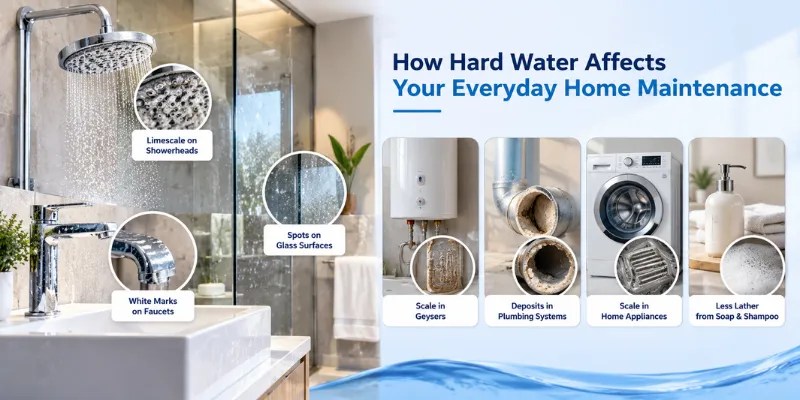
Hard water spots are white or cloudy marks left behind when water containing dissolved minerals evaporates from a surface.
These deposits are commonly caused by calcium and magnesium present in hard water. When water droplets dry on glass, taps, tiles or stainless-steel fixtures, the minerals remain behind and gradually accumulate.
You may notice hard water stains on:
- Bathroom taps and showerheads
- Shower glass and bathroom mirrors
- Kitchen sinks and faucets
- Bathroom tiles and washbasins
- Stainless-steel fixtures
- Geysers and water-using appliances
The harder your water, the more noticeable these deposits can become.
This is why regular cleaning sometimes feels like a never-ending task. You are removing the stains, but the water causing them is still flowing through your home.
How to Remove Hard Water Spots from Glass, Taps and Tiles
Hard water spots can often be removed using suitable household cleaning methods. Fresh mineral deposits are generally easier to remove than established scale.
The key is to use the right cleaning solution for the surface and avoid aggressive scrubbing.
How to Remove Hard Water Spots from Glass
To remove hard water spots from glass, apply a diluted white vinegar solution to compatible glass surfaces, allow it to loosen the mineral deposits, then wipe with a microfiber cloth, rinse and dry thoroughly.
Shower doors and glass partitions are among the most common places where hard water spots appear. Water droplets dry on the glass, leaving behind cloudy white marks.
What you need:
- White vinegar
- Water
- A spray bottle
- A soft microfiber cloth
How to clean:
- Mix equal parts white vinegar and water.
- Spray the solution onto the affected glass surface.
- Allow it to sit for a few minutes.
- Wipe gently using a microfiber cloth.
- Rinse thoroughly with clean water.
- Dry the glass completely to prevent new water spots.
For stubborn hard water spots on shower glass, repeat the process rather than scrubbing aggressively.
Avoid using vinegar on natural stone or surfaces that may be damaged by acidic cleaners. Always check the manufacturer’s cleaning instructions.
How to Remove Hard Water Stains from Bathroom Taps
To remove hard water stains from bathroom taps, use a compatible cleaner or diluted vinegar solution, gently wipe the deposits with a soft cloth, rinse thoroughly and dry the fixture.
White deposits around faucets can make even a freshly cleaned bathroom look neglected.
For chrome, brushed nickel and specialty finishes, follow the manufacturer’s instructions. Avoid leaving acidic cleaners on the surface for extended periods.
A soft microfiber cloth is usually a better choice than an abrasive scrubber, which may scratch delicate finishes.
How to Remove Hard Water Spots from Tiles
Hard water deposits can accumulate around bathroom walls, shower areas and corners where water frequently collects.
Use a surface-compatible bathroom cleaner to loosen the deposits. Gently scrub with a non-abrasive sponge and rinse thoroughly.
If your tiles are made of marble, limestone or another natural stone, avoid vinegar and acidic cleaners. Use a pH-neutral cleaner designed for natural stone.
How to Remove Hard Water Spots from Kitchen Sinks
Kitchen sinks often develop white spots because water droplets are left behind after washing utensils or cleaning vegetables.
For stainless-steel sinks, use a suitable non-abrasive cleaner and a soft cloth. Rinse the sink thoroughly and wipe it dry after cleaning.
This simple habit can help reduce visible water spots and keep your sink looking cleaner for longer.
5 Places Where Hard Water Can Affect Your Home
Hard water does not only affect the appearance of your home. It can also contribute to problems that are less visible.
1. Bathroom Fixtures
Mineral deposits can accumulate around taps and showerheads. Over time, scale buildup may restrict water flow through small openings.
2. Shower Glass and Mirrors
Repeated exposure to hard water can leave persistent mineral deposits that become increasingly difficult to remove.
3. Kitchen Faucets and Sinks
Hard water can leave spots on stainless steel and other surfaces, making them appear dull even after washing.
4. Geysers and Water Heaters
Scale can accumulate on heating elements and inside water heaters. Depending on the appliance and the severity of the buildup, this can affect heating efficiency and increase maintenance requirements.
5. Washing Machines and Dishwashers
Hard water can interfere with detergent performance and contribute to scale buildup inside water-using appliances. It may also leave spots on washed utensils and glassware.
Understanding these hard water effects on home appliances can help you take preventive action before small problems become expensive maintenance issues.
How to Prevent Hard Water Spots from Returning
Removing hard water spots is one thing. Preventing them from returning is another.
Here are a few simple habits that can make your Diwali cleaning last longer.
Wipe surfaces dry after use. Dry bathroom taps, shower glass and kitchen faucets with a microfiber cloth.
Use a shower squeegee. Removing water droplets from shower glass after bathing can reduce the formation of visible spots.
Clean regularly. Fresh mineral deposits are generally easier to remove than established scale.
Choose suitable cleaning products. Use cleaners that are compatible with the surface you are treating.
Check your water quality. If hard water stains keep returning throughout your home, testing your water can help you understand whether hardness is contributing to the problem.
These hard water cleaning tips can help maintain your home, but they do not change the mineral content of your water.
If you are repeatedly cleaning the same stains, it may be time to consider a whole-house hard water solution.
Can a Water Softener Help Prevent Hard Water Stains?
Yes, a suitable water treatment system can help reduce hard water scale and recurring mineral deposits on household surfaces. Conventional water softeners remove calcium and magnesium ions through ion exchange, while salt-free scale prevention systems help manage how these minerals form deposits.
If you find yourself cleaning the same white spots every few days, it may be time to look beyond your cleaning routine.
A conventional water softener typically uses ion exchange to reduce water hardness by replacing calcium and magnesium ions with other ions, commonly sodium.
However, not every water treatment system works in the same way.
SOFTFLOW® uses SLOW-PHOS sequestration technology with polyphosphate media to help manage scale formation. Its technology helps keep scale-forming minerals from depositing as readily on surfaces and inside water systems.
For households dealing with recurring hard water stains, SOFTFLOW® offers a salt-free approach to whole-house scale prevention without the regular salt replenishment associated with conventional ion-exchange softeners.
SOFTFLOW® F1: Whole-House Hard Water Scale Prevention
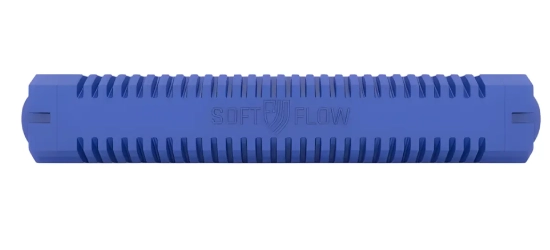
SOFTFLOW® F1 is designed for residential whole-house scale prevention, helping manage scale formation across water outlets throughout the home.
Its key features include:
- Flow capacity of up to 80 litres per minute
- No electricity requirement
- No salt replenishment
- No water wastage through a regeneration process
- Zero routine maintenance
With SOFTFLOW® F1, the objective is to manage scale formation throughout your home’s water system rather than repeatedly dealing with mineral deposits at individual taps and fixtures.
Important: Salt-free scale prevention does not remove calcium and magnesium from water. The right water treatment solution depends on your water quality and household requirements.
This Diwali, Give Your Home the Gift of Better Water
A sparkling home is wonderful. A home that stays easier to maintain is even better.
This Diwali, pay attention to the water flowing through your taps, showers and appliances. If hard water is causing recurring stains and scale buildup, addressing the source can make everyday cleaning less frustrating.
A few simple cleaning habits, combined with the right water treatment approach, can help protect your fixtures and support better household water management.
After all, the best festive makeover is one that lasts beyond the celebrations.
This Diwali, give your home the care it deserves. Start with better water management.
Discover SOFTFLOW® and explore a smarter approach to salt-free scale prevention for your home.
Frequently Asked Questions (FAQs)
How do you remove hard water spots quickly?
Fresh hard water spots can often be removed using a suitable surface cleaner. A diluted vinegar solution may help on compatible glass and fixtures. Always rinse thoroughly and check the manufacturer’s cleaning instructions.
What is the best way to remove hard water spots from glass?
For compatible glass surfaces, a diluted white vinegar solution can help loosen mineral deposits. Wipe with a microfiber cloth, rinse thoroughly and dry the surface.
Why do hard water spots keep coming back?
Hard water spots return because the water continues to contain dissolved minerals. When water evaporates, these minerals can remain on the surface and form new deposits.
Can a water softener prevent hard water stains?
Conventional water softeners reduce hardness by removing calcium and magnesium ions. Salt-free scale prevention systems help manage scale formation without necessarily removing these minerals.
Does SOFTFLOW® remove hardness from water?
SOFTFLOW® uses SLOW-PHOS sequestration technology with polyphosphate media to help manage scale formation. It is a salt-free scale prevention solution, not a conventional
What is a whole-house hard water solution?
SOFTFLOW® uses SLOW-PHOS sequestration technology with polyphosphate media to help manage scale formation. It is a salt-free scale prevention solution, not a conventional
Recent Post
Get the Latest Updates on SOFTFLOW™
Stay informed about new tips, offers, and product updates.