
How to Reduce Limescale Build-Up in Pipes, Boilers & Equipment
Introduction
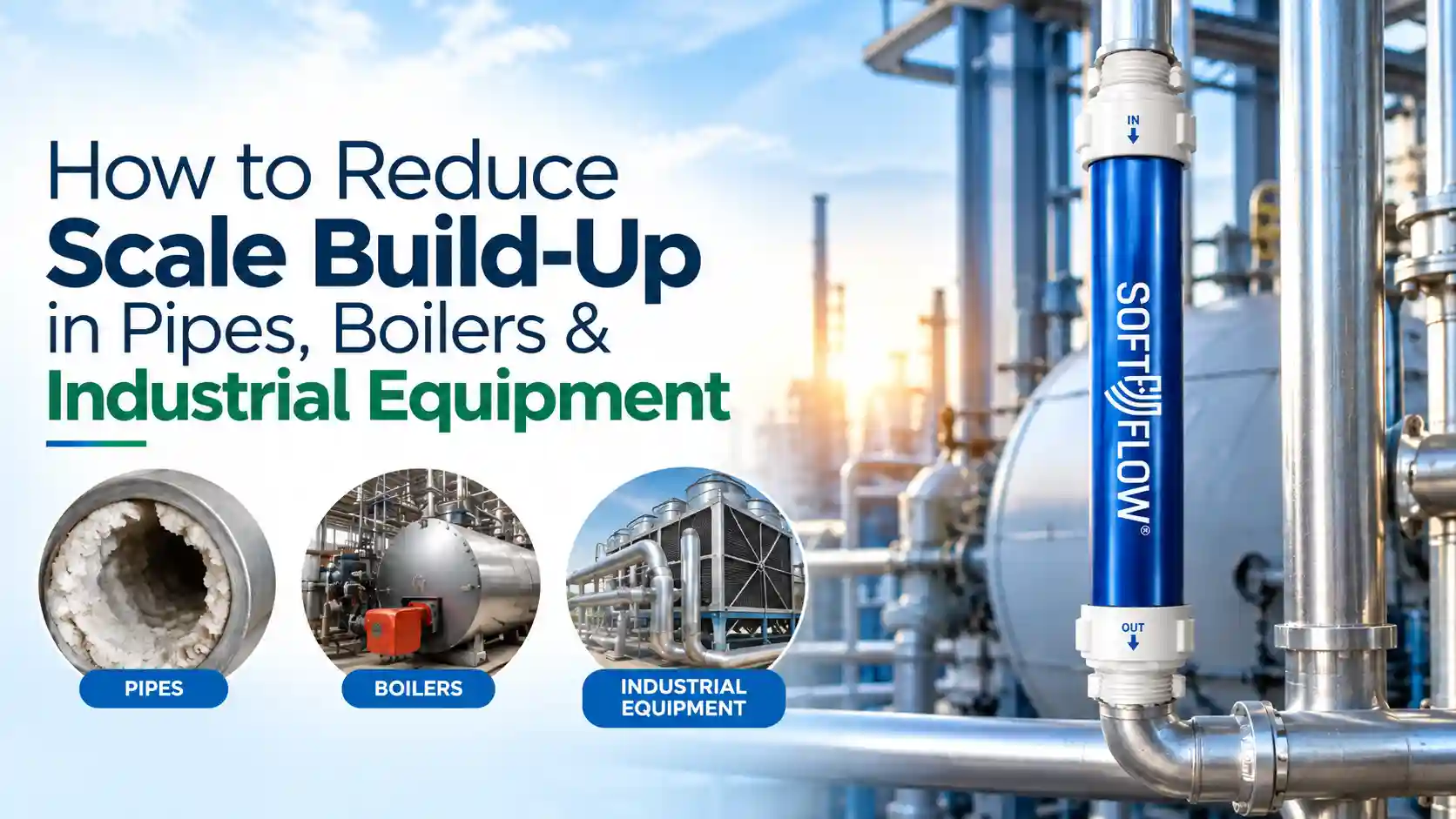
Limescale build-up is a common problem in systems that use hard water. Over time, minerals such as calcium and magnesium can deposit on the internal surfaces of pipes, boilers, heat exchangers, cooling systems, RO equipment, and other industrial machinery.
If left unmanaged, scale can affect water flow, heat transfer, equipment efficiency, and maintenance requirements. For homes, commercial buildings, and industries, scale prevention and proper water treatment can help protect water systems and support more efficient operations.
What Is Scale Build-Up?
Scale build-up is the accumulation of mineral deposits on surfaces that come into contact with hard water. These deposits commonly contain calcium and magnesium compounds.
Scale formation is more likely when water is heated or when water chemistry and operating conditions encourage minerals to come out of solution and attach to equipment surfaces.
Common areas where scale can develop include:
- Pipes and plumbing systems
- Boilers
- Heat exchangers
- Cooling towers
- Water heaters
- RO systems
- Industrial machinery
- Process equipment
The severity of scaling depends on factors such as water hardness, temperature, flow conditions, water chemistry, and equipment operation.
Why Does Hard Water Cause Scale?
Hard water contains dissolved minerals, mainly calcium and magnesium. These minerals are not necessarily harmful by themselves, but they can create operational challenges when they accumulate inside water systems.
Heating hard water can increase the likelihood of mineral precipitation. As deposits accumulate, they can form a hard layer on equipment and pipe surfaces.
This is why hard water treatment and scale management are particularly important for systems that operate with heated or continuously circulating water.
How Does Scale Affect Pipes and Industrial Equipment?
Scale may appear gradually, but its effects can become more noticeable over time.
1. Reduced Water Flow
As mineral deposits accumulate inside pipes, the available space for water to flow can become smaller. This may affect the hydraulic performance of the system and increase operational challenges.
2. Reduced Heat Transfer
In boilers, heat exchangers, and water heaters, scale can act as a barrier between the heating surface and water.
A layer of scale can reduce heat-transfer efficiency, which may increase the energy required to achieve the desired operating temperature.
3. Higher Maintenance Requirements
Heavy deposits may require cleaning, inspection, and maintenance. Depending on the application, this can involve additional water, cleaning products, labour, and equipment downtime.
4. Impact on Equipment Performance
Continuous scale formation can interfere with the normal operation of water-dependent equipment.
For industries, effective scale prevention can therefore form part of a broader equipment maintenance and water-management strategy.
How to Reduce Scale Build-Up
Reducing scale starts with understanding the water entering your system and selecting a treatment strategy that matches the application.
1. Test the Water Before Choosing a Treatment
The first step is to understand your water quality.
A water analysis may include parameters such as:
- Total hardness
- Calcium hardness
- Magnesium
- pH
- Alkalinity
- Total dissolved solids
- Conductivity
Water testing helps determine the nature of the scaling risk and whether additional water treatment is required.
Instead of choosing a treatment system based only on the symptoms, businesses should evaluate the actual water conditions and operating requirements.
2. Choose the Right Water Treatment Solution
There is no single water treatment solution that works for every application.
A residential water system, commercial building, boiler, cooling tower, manufacturing facility, and RO plant can have very different requirements.
Depending on the application, options may include:
- Conventional water softening
- Scale-control systems
- Filtration
- Pre-treatment systems
- RO pre-treatment
- Application-specific industrial water treatment
The right solution should be selected based on water quality, flow rate, equipment requirements, operating conditions, and treatment objectives.
3. Consider Pre-RO Water Treatment
RO systems require appropriate feed-water management to operate effectively.
Hardness and other scale-forming minerals in feed water can create scaling concerns for RO membranes. A suitable pre-RO water treatment approach can help manage feed-water conditions before water reaches the RO system.
For commercial and industrial RO plants, pre-treatment should be designed according to the quality of the incoming water and the requirements of the RO system.
4. Manage Boiler Water Quality
Boilers are particularly sensitive to scale because they operate at elevated temperatures.
A proper boiler water treatment program can include:
- Regular feed-water testing
- Appropriate water treatment
- Monitoring of water chemistry
- Blowdown management
- Regular inspection
- Cleaning when required
The specific treatment strategy should depend on the boiler design, operating conditions, feed-water quality, and manufacturer’s requirements.
5. Monitor Cooling Towers
Cooling towers can also experience scale formation because water is continuously circulated and concentrated through evaporation.
Effective cooling tower water treatment can involve monitoring parameters such as:
- Hardness
- Conductivity
- pH
- Alkalinity
- Cycles of concentration
Regular monitoring helps operators identify changes in water chemistry and make appropriate treatment decisions.
6. Focus on Prevention Instead of Waiting for Heavy Scale
Once significant scale has formed, removing it can require additional cleaning and maintenance.
A preventive approach focuses on controlling the conditions that contribute to scale formation before deposits become difficult to manage.
This is why scale prevention should be considered alongside routine equipment inspection and water-quality monitoring.
Can Salt-Free Water Treatment Help Prevent Scale?
Yes, salt-free scale-control technologies can be suitable for certain applications, depending on the water quality and treatment requirements.
SOFTFLOW® uses SLOW-PHOS® polyphosphate technology to help control scale formation.
SOFTFLOW® F1 is designed as a salt-free, electricity-free scale-control solution for suitable residential, commercial, and industrial applications.
The purpose of scale-control technology is different from conventional ion-exchange softening. Instead of removing hardness minerals from the water, scale-control approaches are designed to help manage the way minerals behave and reduce their tendency to form hard deposits on surfaces.
The appropriate technology should always be selected according to the application, water quality, flow rate, and equipment requirements.
Scale Prevention and Sustainable Water Management
Scale management is not only an equipment-maintenance issue. It can also be connected to water efficiency and sustainable water management.
When scaling affects equipment, additional cleaning and maintenance may be required. In some applications, these activities can involve additional water and other resources.
A proactive water-management approach can therefore follow a simple process:
Water Testing → Treatment Selection → Scale Prevention → Regular Monitoring → Efficient Operation
This approach helps organizations understand their water quality and manage water-dependent systems more responsibly.
For industries, industrial water treatment can be an important part of a wider strategy for improving water efficiency and managing operational resources.
How to Prevent Scale in Industrial Equipment
For industrial facilities, scale prevention should be part of a regular water-management program rather than a one-time activity.
A practical approach includes:
Step 1: Identify the Source of Water
Understand whether the facility uses municipal water, groundwater, borewell water, recycled water, or another source.
Step 2: Test Water Quality
Measure hardness and other relevant water-quality parameters.
Step 3: Identify High-Risk Equipment
Pay particular attention to:
- Boilers
- Heat exchangers
- Cooling towers
- RO systems
- Water heaters
- Process equipment
- Long pipe networks
Step 4: Select Appropriate Treatment
Choose a water treatment system based on the actual water conditions and application.
Step 5: Monitor Performance
Regularly monitor water quality, equipment performance, and signs of scale formation.
Step 6: Maintain the System
Follow an appropriate inspection and maintenance schedule to address problems before they become major operational issues.
Build a Better Approach to Scale Management
Scale build-up does not have to be treated only after it becomes a major maintenance problem. Understanding your water quality and implementing an appropriate scale prevention and water treatment strategy can help you manage pipes, boilers, RO systems, cooling equipment, and other water-dependent machinery more effectively.
For residential, commercial, and industrial applications, the right solution begins with one simple step:
Understand your water before choosing your treatment.
Frequently Asked Questions (FAQs)
What is the best way to prevent scale build-up?
The best approach depends on water quality and the application. Water testing, appropriate water treatment, scale-control measures, regular monitoring, and preventive maintenance can all help reduce the risk of excessive scale formation.
How can I reduce scale in pipes?
Scale in pipes can be managed by addressing the hardness and water chemistry responsible for mineral deposition. Depending on the application, suitable water softening or scale-control technology can help manage the problem.
How can scale be prevented in boilers?
Boiler scale can be managed through proper feed-water treatment, regular water-quality monitoring, appropriate blowdown practices, and routine inspection. A suitable boiler water treatment program should be designed according to the boiler and operating conditions.
Does hard water damage industrial equipment?
Yes, Hard water can contribute to mineral scale formation on equipment surfaces. Depending on the equipment and operating conditions, excessive scale can affect heat transfer, water flow, maintenance requirements, and operational efficiency.
Can scale affect RO systems?
Yes. Hardness and other scale-forming minerals in RO feed water can contribute to scaling concerns on membranes. Appropriate pre-RO water treatment can help manage feed-water conditions.
Recent Post
Get the Latest Updates on SOFTFLOW™
Stay informed about new tips, offers, and product updates.
