
Signs Your Commercial Facility Needs Water Softener
Introduction
In any commercial facility – whether it is a hotel, a hospital, an office complex, or a manufacturing plant keeping operations running smoothly is a top priority. While facility managers focus heavily on heating and cooling systems, electrical setups, and building maintenance, one silent hazard often goes unnoticed until it causes a major breakdown: hard water.
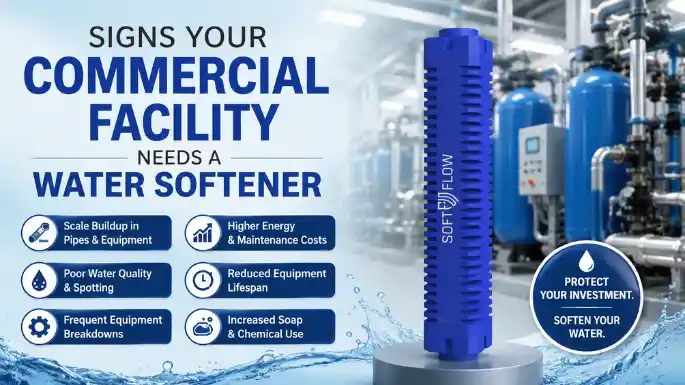
Hard water contains high levels of dissolved minerals, mainly calcium and magnesium. Over time, these minerals build up inside your water supply, creating a long list of maintenance and financial headaches. Recognizing the early signs of hard water damage can save your business thousands of dollars in utility bills and unexpected repair costs.
Investing in a high-quality commercial water softener is a practical, proactive step to protect your equipment. Let us look at the clear signs that your facility needs a water system upgrade, the hidden costs of ignoring the issue, and why installing the best hard water softener for commercial use is the smartest solution for your business.
5 Warning Signs Your Facility Needs a Water Softener
Hard water leaves clear warning signs. If you notice any of the following problems in your building, mineral buildup is likely taking a toll on your infrastructure.
1. Constant Scale Buildup on Fixtures and Pipes
The most visible sign of hard water is limescale. This is the chalky, white mineral crust that forms around faucets, showerheads, valves, and inside piping. In large commercial properties, what you see on the outside is just a small part of the problem. Inside your plumbing lines, this buildup acts like a clogged artery. It slows down water flow, reduces water pressure, and forces your water pumps to work much harder to move water through the building.
2. Frequent Equipment Breakdowns and Shorter Lifespans
Commercial appliances that rely on water such as boilers, cooling towers, industrial laundry machines, commercial dishwashers, and filtration systems are highly vulnerable to mineral deposits. When hard water is heated, calcium and magnesium bake directly onto heating elements. This layer of scale causes parts to overheat and burn out long before they should, leading to expensive emergency repairs and disruptive business downtime.
3. Skyrocketing Energy and Utility Bills
Limescale is a terrible conductor of heat. Studies show that even a very thin layer of scale inside a boiler or water heater can reduce heating efficiency by over 10%. Because the system has to use significantly more energy to heat the same amount of water, your facility’s gas or electricity bills will climb steadily month after month.
4. High Laundry and Cleaning Detergent Costs
If your facility manages hospitality services, healthcare operations, or large-scale cleaning, hard water directly increases your chemical costs. Calcium and magnesium attach to the ingredients in soaps and detergents, neutralizing their cleaning power and creating an insoluble soap scum. To get things properly clean and sanitized, your team has to use up to 40% more detergent, which quickly drives up your supply expenses.
5. Poor Water Quality: Spotted Linens and Glassware
When customer satisfaction matters, water quality directly impacts your business reputation. Hard water leaves unsightly white spots on glassware, silverware, and windows. On top of that, when used in commercial laundries, it traps mineral deposits inside fabric fibers. This causes sheets, towels, and uniforms to look dull or yellowed, and makes them feel rough and scratchy to the touch.
The Operational Benefits of a Commercial Water Softener
Fixing your water quality does more than just solve plumbing headaches. It actively improves your bottom line. Installing a dedicated water softener provides clear savings you can easily measure:
- Big Energy Savings: Removing scale from heating elements allows boilers and cooling loops to work at peak efficiency, lowering your energy bills.
- Longer Equipment Life: Extending the lifespan of major machinery means you can delay spending big money on replacement equipment.
- Less Chemical and Labor Waste: Soft water allows detergents to lather perfectly. This lowers your monthly supply costs and reduces the hours your staff spends scrubbing away stubborn white stains.
- Better Safety and Reliability: Preventing scale in high-pressure systems like boilers reduces the risk of dangerous pipe blockages or sudden system shutdowns.
Why SOFTFLOW® is the Best Hard Water Softener for Commercial Use
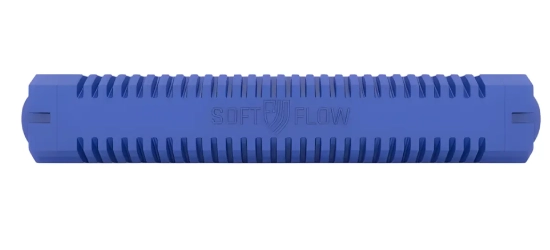
When you need a water system that can handle the high, continuous water demands of a commercial building, standard residential units will not work. You need a system built for heavy use, reliability, and long-term savings. That is exactly where SOFTFLOW® comes in.
SOFTFLOW® systems offer a completely new way to handle commercial water treatment. Traditional softeners require constant maintenance, heavy bags of salt, and waste thousands of gallons of water during their cleaning cycles. SOFTFLOW® is completely different. It uses advanced Sequestration Technology.
Using certified, food-grade media, the system alters the calcium and magnesium on a molecular level. It keeps these minerals suspended in the water stream so they lose their ability to stick to surfaces or form hard scales. Best of all, it does this while keeping the natural mineral balance intact, without adding sodium to your water supply.
Tailored Commercial Series Configurations
SOFTFLOW® offers multi-column systems engineered to scale alongside the size and demands of your business:
- F2 Dual Column Series: Ideal for hotels, schools, and healthcare buildings that need a steady, reliable supply of scale-free water with efficient load handling.
- F3 & F4 Multi-Column Systems: Built for heavy-duty industrial demand, large manufacturing plants, massive HVAC cooling towers, and data centers. These systems run in parallel to provide maximum water flow and continuous, 24/7 soft water with zero downtime.
Key Advantages of Choosing SOFTFLOW®:
- Zero Maintenance and Salt-Free: You never have to carry heavy salt bags to the utility room or manage complex cleaning cycles. The system operates automatically without salt, chemicals, or electricity.
- Zero Water Waste: Traditional softeners flush high-salt water down the drain during regeneration. SOFTFLOW® saves every single drop of water, helping your business meet environmental and sustainability goals.
- Fast Return on Investment: With no monthly maintenance fees, no salt costs, and immediate energy savings, the system pays for itself very quickly.
- Zero Maintenance and Salt-Free: You never have to carry heavy salt bags to the utility room or manage complex cleaning cycles. The system operates automatically without salt, chemicals, or electricity.
- Zero Water Waste: Traditional softeners flush high-salt water down the drain during regeneration. SOFTFLOW® saves every single drop of water, helping your business meet environmental and sustainability goals.
- Fast Return on Investment: With no monthly maintenance fees, no salt costs, and immediate energy savings, the system pays for itself very quickly.
Conclusion: Upgrade Your Facility's Water Strategy
Hard water is a hidden tax on your facility’s budget, quietly damaging pipelines, overworking machinery, and driving up utility expenses. Noticing the signs like persistent white scale, drops in water pressure, or rising energy bills is the first step toward fixing the problem.
Installing a reliable commercial water softener is a smart business investment that protects your building and cuts down daily operating costs. With its eco-friendly technology and heavy-duty configurations, SOFTFLOW® stands out as the best hard water softener for commercial use.
Do not wait for a major breakdown to address your water issues. Take control of your building’s health, lower your expenses, and ensure peak performance by upgrading to a tailored SOFTFLOW® solution today.
Frequently Asked Questions (FAQs)
Does the SOFTFLOW® F1 reduce the Total Dissolved Solids (TDS) of water?
No, the SOFTFLOW® F1 does not reduce TDS. It utilizes advanced Sequestration Technology with certified Slow-Phos® media. Instead of physically removing calcium and magnesium (which alters TDS), it safely changes their chemical behavior, keeping them fully suspended in the water so they cannot form rock-hard limescale.
Is water softener by SOFTFLOW® safe to drink?
Yes, it is completely safe. Unlike traditional salt-based water softeners that replace hard minerals with high amounts of sodium, SOFTFLOW® adds zero sodium or chemicals to your water. It retains the essential minerals in a harmless state, making the water completely wholesome for routine household usage.
How often do I need to replace the SOFTFLOW® F1 system?
The SOFTFLOW® F1 is designed as a hassle-free, complete device replacement system.
- For whole-house application (connected to the main overhead tank line), it typically lasts up to 12 months.
- If installed only for dedicated bathroom use (e.g., connected to a single geyser or washing machine inlet), the unit can last up to 24 months depending on your daily consumption and water hardness levels.
Does the system require electricity or plumbing changes to operate?
Not at all. The SOFTFLOW® F1 is a non-electric system that runs completely on natural water line pressure and gravity flow. It features a compact, inline design with standard 25mm inlet/outlet sizing, allowing a local plumber to easily fit it into your existing pipeline within minutes without major restructuring.
What is the maximum water flow rate the device can handle?
The SOFTFLOW® F1 is built for high-performance domestic use and comfortably supports a maximum flow rate of up to 80 Liters per Minute (LPM). This heavy-duty capacity ensures that even if multiple taps, showers, or washing machines are running concurrently across different bathrooms, there will be no drop in your household’s water pressure.

Recent Post
Get the Latest Updates on SOFTFLOW™
Stay informed about new tips, offers, and product updates.
