
Can a Water Softener Lower Your Electricity Bills?
Introduction
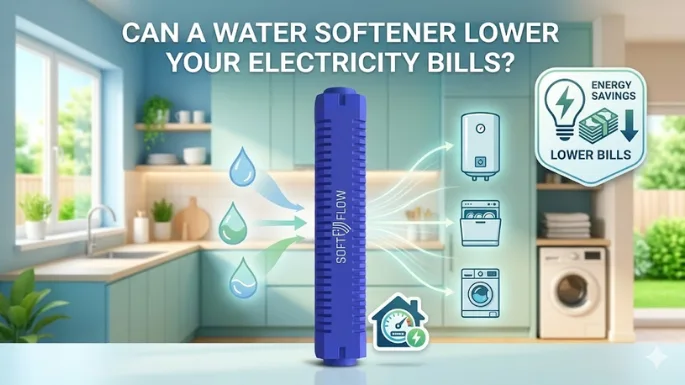
In short, Answer is yes. If your electricity bill keeps climbing month after month, your water supply might be quietly to blame. Most Indian households, particularly in cities like Delhi, Mumbai, Gujarat, and Bengaluru, receive hard water loaded with dissolved calcium and magnesium minerals. While the effects are visible on bathroom tiles and taps, the real damage happens inside your appliances, where you cannot see it.
Every time hard water is heated, those minerals crystallise and stick to heating elements, pipe walls, and boiler surfaces as a white, chalky deposit called limescale. Over time, this invisible layer forces your geyser, washing machine, dishwasher, and kettle to work harder and consume significantly more electricity to achieve the same result. The outcome is higher bills, shorter appliance lifespans, and avoidable maintenance costs.
This blog breaks down the science behind scale-related energy losses, quantifies the financial impact for real Indian households, and explains how a whole-house water softening system can pay for itself in as little as 18 months.
The Physics: Thermal Conductivity
Material | Thermal Conductivity (W/m·K) |
Carbon steel (boiler tube) | 50–54 |
Copper (pipe) | 385–400 |
Aluminium | 205 |
Calcium carbonate (limescale) | 0.5–3.0 |
Air | 0.025 |
Limescale is 10–60× less conductive than steel; it acts as a powerful insulator on heating elements.
Battelle Memorial Institute study found gas water heaters at 26 GPG hardness used 29.6% more gas than on softened water.
Scale Accumulation & Energy Loss Over Time
Scale Thickness | Energy Loss | Time to Reach (Very Hard Water) |
0.5 mm | 4–6% | 6–12 months |
1.6 mm | 10–15% | 1–2 years |
3.2 mm | 20–25% | 2–3 years |
6.4 mm | 35–45% | 4–6 years |
Financial Calculations (Indian Household Examples)

Scenario A: Apartment in Mumbai/Delhi (Hard Water)
- Monthly electricity bill: ₹5,000
- Water heating share: 25–30% = ₹1,250–1,500
- Efficiency loss at 15%: ₹187–225/month wasted
- Over 5 years: ₹12,000–15,000+ wasted
Scenario B: Bungalow with Geyser & Washing Machine (Very Hard Water)
- Monthly electricity bill: ₹12,000
- Water heating/laundry: 35% = ₹4,200
- Efficiency loss at 20%: ₹840/month wasted
- Over 5 years: ₹50,000+ avoidable
Affected Appliances Beyond the Water Heater
Appliance | Hard Water Impact |
Washing machine | 15–20% longer heating; element failure 2–3 years early |
Dishwasher | Blocked spray arms; more electricity per cycle |
Electric kettle | 30–40% longer to boil when heavily scaled |
Coffee machine | Frequent costly descaling required |
Appliance Lifespan Comparison
Appliance | Soft Water Lifespan | Hard Water Lifespan | Replacement Cost |
Water heater/geyser | 10–12 years | 6–8 years | ₹8,000–25,000 |
Washing machine | 12–15 years | 8–10 years | ₹25,000–60,000 |
Dishwasher | 10–12 years | 6–8 years | ₹20,000–40,000 |
Electric kettle | 5–7 years | 2–4 years | ₹1,500–4,000 |
Coffee machine | 7–10 years | 4–6 years | ₹5,000–30,000 |
Additional Indirect Savings from Softened Water
- Laundry detergent: 50–60% less
- Dishwasher detergent: 30–50% less
- Shampoo/body wash: 20–40% less
- Descaling chemicals: virtually eliminated
- Plumbing maintenance: ₹5,000–15,000/year savings
ROI of Water Treatment Systems (India)
System Type | Installed Cost | Annual Operating Cost | Typical ROI |
Salt-based softener | ₹18,000–45,000 | ₹6,000–15,000 (salt + service) | 2–3 years |
Salt-free TAC (e.g., SOFTFLOW® F1) | ₹20,000–50,000 | ₹1,500–4,000 (media) | 1.5–2.5 years |
Electronic descaler | ₹5,000–15,000 | ₹500–1,500 (electricity) | 3–5 years (variable) |
Most households with hard water see full payback within 18–30 months.
Conclusion:
Hard water is not merely a nuisance. It is a measurable drain on your monthly expenses. Through the compounding effects of scale-insulated heating elements, shortened appliance lifespans, and excessive detergent consumption, hard water can cost an urban Indian household tens of thousands of rupees over just a few years, often without the household ever realising the source of the problem.
A whole-house water softener system addresses these losses directly at the source. By preventing limescale from forming in the first place, your appliances heat water efficiently again, consume less electricity, and last years longer. The investment typically pays for itself in under two and a half years, after which the savings are yours to keep, month after month.
If you are looking at your electricity bill and wondering where the money is going, start by testing your water hardness. The answer may be flowing right through your pipes.
Frequently Asked Questions (FAQs)
Can a whole-house water softener really reduce electricity bills?
Yes, a whole-house water softener can improve the efficiency of appliances like water heaters, washing machines, and dishwashers by preventing limescale buildup, which helps reduce energy consumption and lower electricity bills.
How does hard water increase energy consumption?
Hard water causes mineral deposits (limescale) to build up inside appliances and pipes, forcing them to work harder and use more electricity to perform the same tasks.
Which appliances benefit the most from a water softener?
Appliances such as water heaters, washing machines, dishwashers, and even coffee makers benefit significantly, as they run more efficiently and last longer with soft water.
How much can I save on electricity with a water softener?
Savings vary depending on water hardness and usage, but households can see noticeable reductions in energy bills due to improved appliance efficiency and reduced heating time.
Is installing a water softener worth it for long-term savings?
Yes, beyond electricity savings, a water softener reduces maintenance costs, extends appliance lifespan, and improves overall water quality, making it a cost-effective long-term investment.
Recent Post
Get the Latest Updates on SOFTFLOW™
Stay informed about new tips, offers, and product updates.
