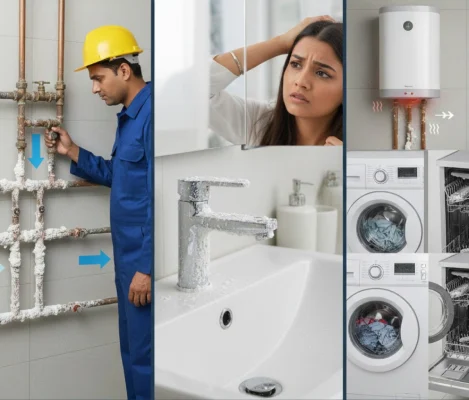
Modern apartments rely mostly on borewell water or a mixed water supply. This type of water is usually very hard because it contains high levels of calcium and magnesium. Hard water may look clean, but it creates continuous damage inside bathrooms, pipelines, taps, geysers, and appliances.
The problem is slow and silent. Many residents notice it only after something breaks down. In this blog, you will learn how hard water damages plumbing, faucets, and home appliances, along with how you can protect your home from long-term damage.
Hard water contains dissolved minerals. When water flows through pipes or appliances, these minerals stick to surfaces and create limescale. Limescale is the chalky white substance you often see on taps, tiles, and showers.
Over time, limescale becomes thick and hard, causing:
This makes hard water one of the biggest hidden expenses for apartment residents.
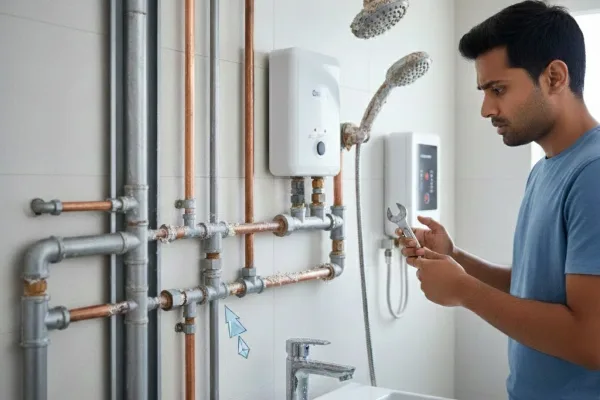
Hard water deposits minerals inside pipes, causing limescale, clogs, leaks, and reduced water flow. Over time, this buildup strains plumbing systems and damages apartment fixtures and appliances.
Inside pipelines, hard water forms a limescale that narrows the passage for water. You cannot see it from outside, but it slowly chokes the system.
Impact of pipeline scaling:
In many apartments, pipeline scaling becomes severe within just two to three years of occupation.
Hard water minerals react with metal pipes and fittings. This speeds up corrosion.
You may notice:
Corroded pipes also allow contaminants to mix with water, reducing water quality inside your apartment.
Many apartments use booster pumps to push water to higher floors. When pipes are partially blocked with scale, pumps need to work harder.
This leads to:
This is a common issue in high-rise buildings with hard water.
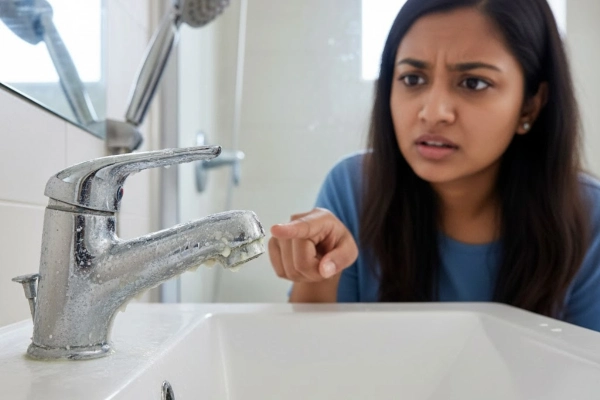
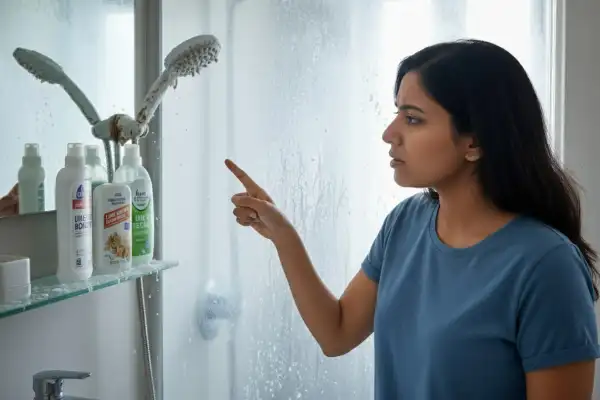
The white marks that appear on taps, showers, and tiles are limescale deposits. Even after cleaning, the spots often come back within hours.
These stains make bathrooms look old and dull, no matter how well you maintain them.
Minerals settle inside showerholes and block them. This reduces water pressure and results in uneven water flow. Most residents replace showerheads frequently because of this.
Hard water wears off the shiny chrome layer on faucets. Over time:
Even premium bathroom fittings lose their quality faster in hard water conditions.
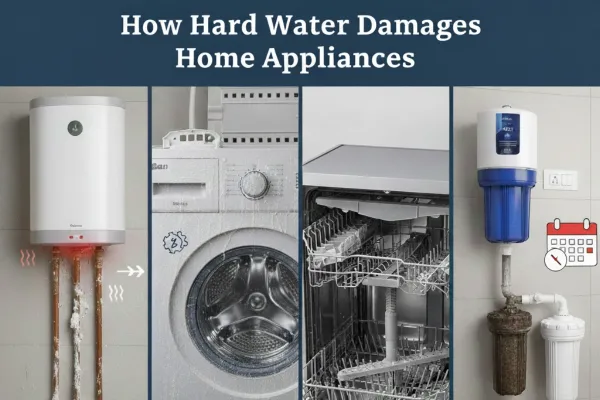
Hard water is the biggest enemy of geysers. When hard water is heated, minerals settle and form a thick layer on the heating element.
This causes:
A geyser that normally lasts eight years may fail in only three to four years in a hard water apartment.
Hard water reduces the effectiveness of detergents and affects the inner drum.
Common problems:
The washing machine motor also gets affected due to continuous mineral buildup.
Hard water leaves spots on plates and glasses. Over time, spray arms in dishwashers get clogged, reducing washing efficiency and causing frequent repair needs.
RO membranes get choked by hard water minerals. This leads to:
Apartment residents with hard water often replace RO cartridges twice as often as others.
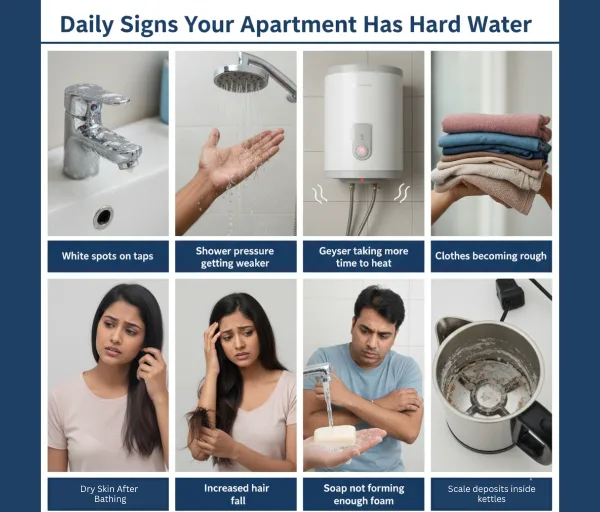
You may be experiencing hard water without realizing it. Watch for these signs:
If you notice even a few of these symptoms, your apartment likely has hard water.
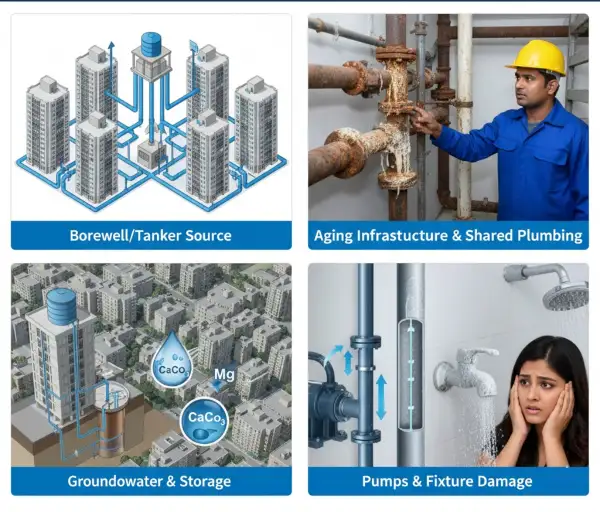
There are several reasons:
This makes regular tap water harmful for home appliances and bathroom fittings.
You can try these basic steps:
These can reduce surface deposits but do not solve internal scaling.
Hard water silently damages your apartment plumbing, faucets, and appliances every day. It reduces water flow, increases electricity bills, shortens appliance life, and adds frequent maintenance costs.
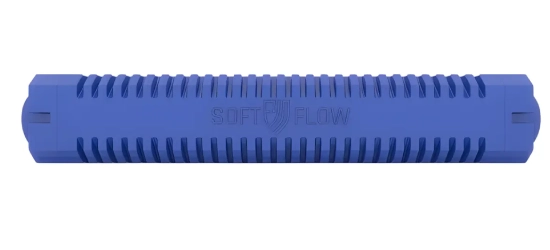
The best long-term solution is using a no-salt, zero-maintenance water softener for Apartments that prevents scaling from the source. This type of softener protects your taps, showers, pipes, geysers, washing machines, and RO without changing your plumbing.
Hard water contains high levels of minerals like calcium and magnesium. Many apartment complexes rely on municipal or borewell water sources, which often have naturally high mineral content, making hard water a widespread issue.
Hard water can cause dry skin and hair, leave white stains on taps and tiles, reduce the lifespan of appliances like washing machines and geysers, and increase detergent usage due to poor lathering.
Common signs include soap not lathering well, scale buildup on faucets, cloudy glassware, stiff laundry, and frequent appliance breakdowns. You can also use a simple hardness test kit for accurate results.
Yes. Mineral deposits from hard water gradually form inside pipes, reducing water flow, clogging fixtures, and causing long-term plumbing issues, which can be costly to repair.
Popular solutions include installing whole-building water softeners, point-of-use softeners for kitchens or bathrooms, RO systems for drinking, and descalers to reduce mineral buildup. The right choice depends on water hardness levels and apartment size.
Stay informed about new tips, offers, and product updates.

Brand by Aquaficient Technologies Pvt Ltd.
Aquaficient Technologies Private Limited
#A1&2, Dwarakavasa Road, Bharath Nagar, Bengaluru, Karnataka, 560091.
Get notified with our latest updates and innovations.
© 2024 Copyrights by Aquaficient Technologies Private Limited. All right reserved.
Designed & Developed by SwaParichay Studios