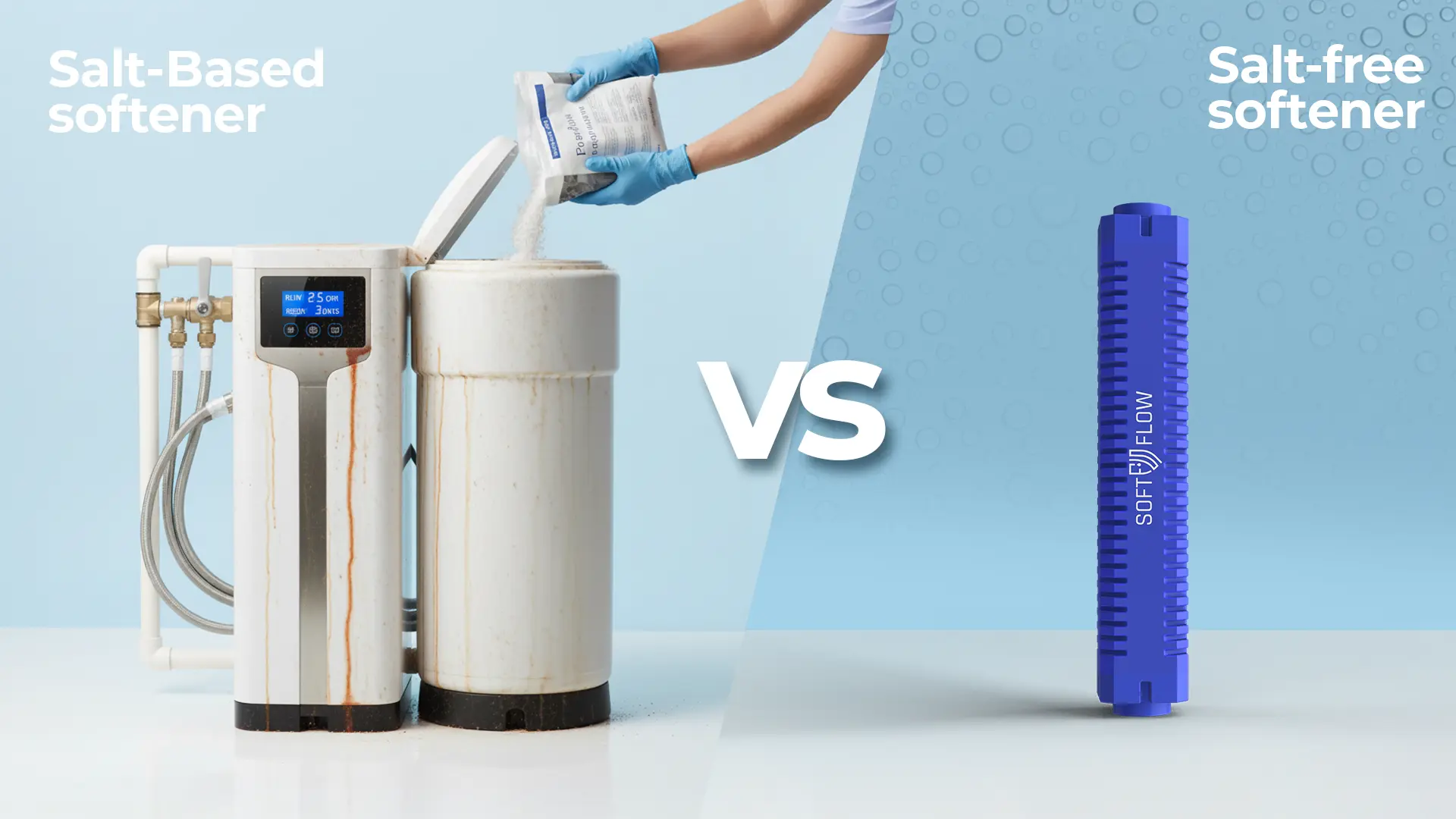
Salt-based and salt-free water softeners both help fix hard water, but salt-free systems like SOFTFLOW® are easier for most Bangalore homes. SOFTFLOW® water softeners do not need salt or electricity, require almost no maintenance, and are better for the environment. Salt-based softeners use salt to remove minerals but need regular salt refills and create waste water.
Hard water in Bangalore causes white stains on taps, reduces the life of home appliances, and makes soaps less effective. It can leave skin feeling dry and make hair appear dull. Using a water softener for home appliances protects washing machines, water heaters, and other devices, helping them last longer and work better.
Salt-based water softeners swap hard minerals with salt, making water soft but adding a little salt to it. They need frequent attention, salt refills, and create water waste. Salt-free water softeners do not add anything to the water. Instead, they change the shape of hard minerals so they do not stick to pipes or appliances. This solves scaling issues and protects appliances without extra work or running costs.
For most people in Bangalore, a salt-free water softener for the home is the best choice. It is simple, needs no maintenance, is good for health, and does not harm the environment. SOFTFLOW® systems are especially good if you want to avoid adding extra salt to water or if you want a system you can install and forget. If water is hard, salt-based units work well, but they require more effort and are not as eco-friendly.
Salt-based water softeners swap hard minerals with salt, making water soft but adding a little salt to it. They need frequent attention, salt refills, and create water waste. Salt-free water softeners do not add anything to the water. Instead, they change the shape of hard minerals so they do not stick to pipes or appliances. This solves scaling issues and protects appliances without extra work or running costs.
Feature | Salt-Based Water Softener | Salt-Free Water Softener (SOFTFLOW®) |
Working Method | Uses salt to remove hard minerals | Changes mineral structure to prevent scale without using salt |
Maintenance | Requires regular salt refills and cleaning | Nearly zero maintenance, no salt refills needed |
Environmental Impact | Creates wastewater with salt | Eco-friendly, no wastewater or salt discharge |
Effect on Appliances | Protects well by removing minerals | Protects by preventing scale buildup |
Health Impact | Adds sodium to water | No sodium or chemicals added; healthier for family |
Ease of Use | Moderate (needs monitoring) | Very easy—install and forget |
Cost Over Time | Higher due to salt and maintenance | Lower due to no consumables or extra water use |
Ideal For | Very hard water areas | Most Bangalore homes with moderate hard water |
Choose the best water softener for home by thinking about your water hardness, lifestyle, and what matters to your family:
Investing in the right water softener keeps your appliances running smoothly, saves on repairs, and makes everyday water safer and more pleasant for Bangalore families.
Salt-based softeners use ion exchange to remove hardness-causing minerals like calcium and magnesium, replacing them with sodium or potassium. Salt-free systems, on the other hand, don’t remove minerals but instead neutralize them so they don’t stick to surfaces — reducing scale buildup without altering water chemistry.
Salt-based and salt-free water softeners both help fix hard water, but salt-free systems like SOFTFLOW® are easier for most Bangalore homes. SOFTFLOW® water softeners do not need salt or electricity, require almost no maintenance, and are better for the environment. Salt-based softeners use salt to remove minerals but need regular salt refills and create waste water.
No, the sodium added is minimal — usually well within safe limits for drinking. However, many households prefer using a separate drinking water filter (like RO) along with a salt-based softener for the best taste and purity.
Salt-based softeners need regular salt refills and periodic cleaning of the resin bed.
Salt-free systems are virtually maintenance-free — no salt refills or regeneration cycles. However, they may need occasional filter replacement.
Salt-based softeners have a higher ongoing maintenance cost (due to salt and servicing) but deliver better protection for plumbing and appliances in high-hardness areas. Salt-free systems have lower operating costs, but may not fully prevent limescale buildup if the water hardness is very high, as it often is in parts of Bangalore.

Brand by Aquaficient Technologies Pvt Ltd.
Aquaficient Technologies Private Limited
#A1&2, Dwarakavasa Road, Bharath Nagar, Bengaluru, Karnataka, 560091.
Get notified with our latest updates and innovations.
© 2024 Copyrights by Aquaficient Technologies Private Limited. All right reserved.
Designed & Developed by SwaParichay Studios