
The Role of Water Treatment in Building a Sustainable Future
Introduction
Water is one of the most valuable resources on our planet, and using it responsibly is becoming increasingly important for homes, businesses, and industries. Water sustainability is not only about reducing the amount of water we consume. It is also about improving water efficiency, minimizing wastage, protecting water-dependent systems, and making better use of available resources.
This is where water treatment plays an important role.
From managing hard water and preventing scale formation to supporting RO systems, boilers, cooling towers, and industrial processes, the right water treatment solution can contribute to more efficient and responsible water management.
What Is Sustainable Water Management?
Sustainable water management means managing water resources in a way that balances present requirements with long-term availability.
It focuses on:
- Reducing unnecessary water consumption
- Improving water-use efficiency
- Minimizing water wastage
- Reusing water where appropriate
- Protecting water infrastructure and equipment
- Choosing suitable water treatment technologies
For industries and commercial facilities, sustainable water management can become an important part of their overall environmental and operational strategy.
Why Is Water Treatment Important for Water Sustainability?
Water quality can have a direct impact on how efficiently water is used.
For example, hard water contains dissolved minerals such as calcium and magnesium. When hard water flows through pipes, heating systems, boilers, heat exchangers, and other equipment, it can contribute to scale formation.
Over time, scale can affect equipment performance and increase cleaning and maintenance requirements.
Therefore, water treatment is not simply about treating water after a problem occurs. It can also be about managing water quality to support efficient water use and protect water-dependent systems.
1. Water Treatment Can Support Water Efficiency
Water efficiency means getting the required value from water while minimizing unnecessary consumption.
In commercial and industrial environments, water may be used for:
- Cooling
- Heating
- Cleaning
- Manufacturing
- Processing
- RO systems
- Boilers
- Cooling towers
When these systems experience scaling or other water-quality issues, their operation and maintenance requirements can be affected.
A suitable water treatment system can help address specific water-quality challenges and support more efficient system operation.
2. Scale Prevention and Sustainable Water Management
Scale is one of the common challenges associated with hard water.
When minerals accumulate inside equipment and plumbing, they can create deposits that affect water flow and heat-transfer surfaces.
This can lead to additional cleaning and maintenance requirements, potentially involving more water, chemicals, energy, and downtime.
This makes scale prevention an important consideration within a broader water sustainability strategy.
Instead of focusing only on removing scale after it develops, businesses can consider preventive approaches suited to their water conditions and application.
3. Supporting Sustainable Industrial Water Treatment
Industries often have complex water requirements, making industrial water treatment an important part of their operations.
A sustainable approach begins with understanding:
How much water enters the facility?
Where is it being used?
Where is water being lost?
Can water be reused?
What treatment is actually required?
This approach can help organizations identify opportunities to improve their industrial water efficiency.
The objective is not necessarily to use the minimum possible amount of water, but to use it efficiently and responsibly for the intended application.
4. The Role of Pre-RO Water Treatment
Reverse osmosis is widely used for water purification across residential, commercial, and industrial applications.
However, the quality of feed water can affect RO system operation. Hardness and scale-forming minerals can create challenges for RO membranes.
This is why pre-RO water treatment can be an important part of an overall RO water-management strategy.
Managing feed-water quality before it reaches the RO system can help support the system and reduce hardness-related scaling concerns.
For facilities using RO systems regularly, evaluating the complete water-treatment process not just the RO unit itself, can be an important step toward better water management.
5. Water Treatment and Equipment Life
Sustainability also involves thinking beyond immediate water consumption.
Equipment such as:
- Boilers
- Heat exchangers
- Cooling towers
- Water heaters
- Industrial machinery
- RO systems
can depend heavily on water quality.
Managing scale and other water-quality challenges can support proper equipment operation and maintenance.
When equipment remains functional for longer, businesses may be able to reduce the frequency of replacement and the associated use of materials and resources.
6. Improving Water Management in Commercial Buildings
Hotels, offices, hospitals, apartments, restaurants, and other commercial properties can have significant water requirements.
A commercial water treatment strategy can focus on understanding the building’s water profile and identifying areas where efficiency can be improved.
This can include:
- Monitoring water consumption
- Checking for leaks
- Managing hard water
- Optimizing water-using equipment
- Evaluating RO systems
- Improving maintenance practices
- Exploring appropriate water-reuse opportunities
A combination of these measures can contribute to a more structured approach to sustainable water management.
7. Water Reuse as Part of Sustainability
Water sustainability is not limited to reducing consumption.
Where technically and legally appropriate, water reuse and recycling can also help reduce the demand for fresh water.
Depending on water quality and application requirements, treated water may be suitable for certain non-potable uses.
However, reuse systems must be designed according to the intended application, water quality requirements, health considerations, and applicable regulations.
8. Choosing the Right Water Treatment Technology
There is no universal water treatment solution for every application.
A home, apartment building, hotel, manufacturing facility, boiler system, cooling tower, and RO plant can have completely different water-treatment requirements.
Before selecting a solution, factors such as:
- Water hardness
- Flow rate
- Feed-water quality
- Application
- Equipment requirements
- Maintenance requirements
- Water consumption
- Treatment objectives
should be evaluated.
Choosing an application-specific solution can help avoid unnecessary treatment while addressing the actual water-quality challenge.
How SOFTFLOW® Fits Into Sustainable Water Management
At SOFTFLOW®, the focus is on managing hard-water scale through a salt-free approach.
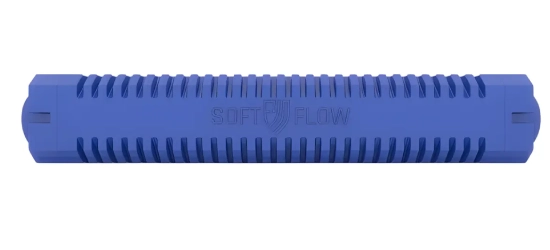
SOFTFLOW® F1 uses SLOW-PHOS® polyphosphate technology to help control scale formation in suitable water systems.
Unlike conventional salt-based softeners that use a regeneration process, SOFTFLOW® F1 is designed as a salt-free, electricity-free scale-control solution.
Depending on the application and water conditions, it can be considered for homes, commercial spaces, and industrial applications, including suitable pre-RO water-treatment requirements.
The larger objective is simple: better water management with a focus on efficiency, scale control, and responsible resource use.
Building a Sustainable Water Future
Water sustainability requires more than one solution.
It requires a combination of water conservation, water efficiency, monitoring, responsible reuse, appropriate treatment, and better management practices.
Water treatment can be an important part of this journey because managing water quality can also help organizations manage the systems that depend on that water.
The future of water management is not simply about using less.
It is about using water smarter, treating it appropriately, reducing unnecessary waste, and protecting resources for the future.
Frequently Asked Questions (FAQs)
How does water treatment support sustainability?
Water treatment can improve water-use efficiency, manage water quality, reduce scale-related issues, and support responsible water management in homes, commercial spaces, and industries.
Can water treatment help reduce water wastage?
Yes. Appropriate water treatment can help manage scale and water-quality issues that may affect equipment efficiency, cleaning requirements, and maintenance. This can support efforts to reduce unnecessary water consumption.
Why is scale prevention important for water sustainability?
Scale buildup can affect pipes and water-dependent equipment such as boilers, heat exchangers, and cooling systems. Managing scale can support efficient operation and reduce additional cleaning and maintenance requirements.
What is sustainable water management?
Sustainable water management is the responsible use and management of water resources by focusing on water conservation, efficiency, reuse where appropriate, quality management, and reducing unnecessary wastage.
What role does water treatment play in industrial water management?
Industrial water treatment helps address water-quality requirements for applications such as boilers, cooling towers, manufacturing processes, and RO systems, supporting efficient and responsible water use.
Recent Post
Get the Latest Updates on SOFTFLOW™
Stay informed about new tips, offers, and product updates.