
How Water Treatment Impacts Your Carbon Footprint
Introduction
In 2026, the global conversation around climate change has shifted from simply “reducing plastic” to a deeper understanding of the water-energy-climate nexus. While many people track their driving habits or meat consumption, they often overlook the liquid running through their pipes.
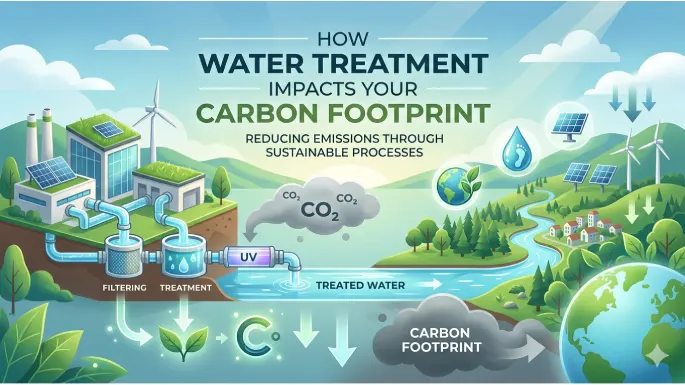
However, the water industry is responsible for roughly 3% of global greenhouse gas emissions—a footprint on par with the entire aviation industry. Understanding how Water Treatment Impacts Your Carbon Footprint is essential for anyone looking to reduce their environmental impact.
From the energy used to pump water into your home to the extra fuel required to heat scaled-up pipes, here is how modern water management and treatment can help you lead a more sustainable life.
1. The Energy-Water Nexus: Why Treatment Costs Carbon
The primary reason water treatment carries a carbon cost is energy intensity. Moving and cleaning water requires a massive amount of electricity, which is still largely generated by fossil fuels.
- Pumping and Distribution: In many regions, up to 80% of a water utility’s energy use goes toward pumping water from its source, through treatment plants, and into your home.
- Aeration: In wastewater treatment, pumping air into tanks to help “good” bacteria break down waste is the single most energy-hungry process, often accounting for 40% to 50% of a plant’s total electricity bill.
- Chemical Production: The manufacturing and transport of chemicals like chlorine and coagulants used to disinfect water also carry an “embodied” carbon footprint.
2. Hidden Emissions: Methane and Nitrous Oxide
It’s not just about electricity. Wastewater treatment plants are biological hubs that can release potent greenhouse gases directly into the atmosphere:
Methane (CH₄): Produced during the anaerobic (oxygen-free) breakdown of organic matter. Methane is 25–28 times more effective at trapping heat than CO₂.
Nitrous Oxide (N₂O): Often a byproduct of removing nitrogen from sewage. This gas is nearly 300 times more potent than carbon dioxide.
Recent 2026 studies from institutions like Princeton suggest that global emissions from these “hidden” gases may be underestimated by as much as 20%, making modern, airtight treatment infrastructure more critical than ever.
3. How to Lower Your "Water-Carbon" Footprint
Reducing the carbon impact of your water usage doesn’t just save a precious resource; it directly reduces the load on energy-intensive treatment facilities.
Use Less Hot Water
Heating water is the second largest energy expense in most homes. By taking shorter showers or using cold-water laundry cycles, you reduce the carbon footprint of both the water treatment and the energy used to heat it.
Install Low-Flow Fixtures
Modern low-flow showerheads and aerators can reduce water usage by 30% or more without sacrificing pressure. This means less water needs to be pumped and treated by your city, lowering the collective municipal carbon output.
Choose Eco-Friendly Filtration
If you use home filtration, consider sustainable options:
- Gravity-fed filters: These require zero electricity.
- Activated carbon: Often made from renewable coconut shells.
- UV Purification: Highly effective at killing bacteria with very low energy consumption compared to chemical-heavy alternatives.
4. The Future: Circular Water Economies
In 2026, leading cities are moving toward a “Circular Water” model to hit Net-Zero targets. This involves:
- Biogas Recovery: Capturing methane from sewage to power the treatment plant itself.
- Water Reuse: Treating wastewater for industrial or agricultural use locally, which reduces the energy needed to pump fresh water from distant sources.
- Digital Twins: Using AI to monitor leaks and optimize pump speeds in real-time, cutting energy waste by up to 15%.
Summary Table: Carbon Impact of Different Water Sources
Water Source | Energy Intensity | Carbon Footprint Rank |
Rainwater Harvesting | Very Low | Lowest |
Local Groundwater | Low to Moderate | Low |
Surface Water (Lakes/Rivers) | Moderate | Medium |
Desalination | Very High | Highest |
Understanding the link between your tap and the atmosphere is the first step toward true sustainability. Every gallon saved is a gram of carbon kept out of the sky.
Frequently Asked Questions (FAQs)
How does hard water increase my carbon footprint?
Hard water creates scale buildup in pipes and appliances. This buildup acts as an insulator, forcing your water heater to work much harder and consume significantly more energy to reach the same temperature.
Can a water softener actually save energy?
Yes. By preventing scale, softeners keep heating elements efficient. Studies show that appliances running on soft water can maintain their original factory energy efficiency for their entire lifespan, whereas hard water can drop efficiency by 25% or more in just a few years.
Is there a "green" way to treat hard water?
Traditional salt-based softeners use a “backwash” process that wastes hundreds of gallons of water. Salt-free sequestration technology or physical water conditioners are more sustainable as they treat scale without wasting water or discharging salt into the environment.
Does hard water affect my appliances' lifespan?
Significantly. Hard water can cut the life of a water heater or boiler in half. Frequent replacements mean more carbon emissions from the manufacturing, shipping, and disposal of bulky steel appliances.
How does SOFTFLOW® technology help the environment?
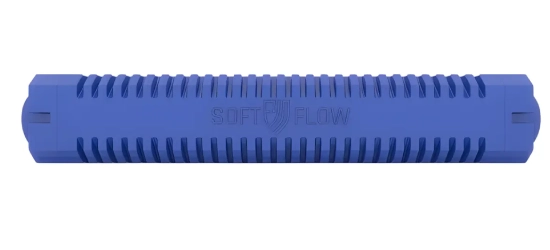
Systems that use zero-maintenance, salt-free technology eliminate the need for monthly salt deliveries (reducing transport emissions) and stop the discharge of brine into local ecosystems, helping facilities reach water-positive goals.
Recent Post
Get the Latest Updates on SOFTFLOW™
Stay informed about new tips, offers, and product updates.